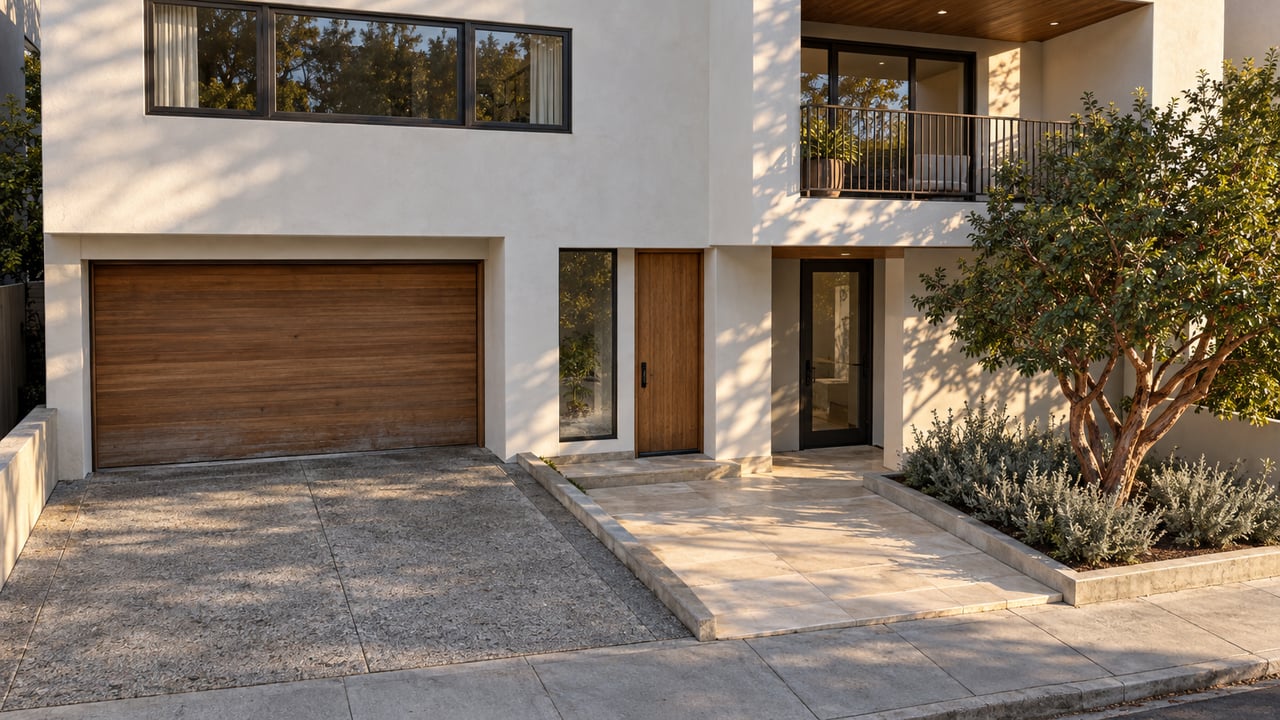
Two duplex lots come on the market in Redondo Beach in the same month. Same R-2 zoning. Same buildable envelope on paper. Same price per square foot. One buyer closes escrow, pulls permits, and breaks ground within a year. The other spends two or three years waiting on a Coastal Development Permit that the first buyer never had to file for. The zoning designation on both listings looked identical. What decided the outcome was a boundary line that Redondo Beach itself has been fighting over in court.
That is not a hypothetical risk borrowed from some general California housing debate. It is the city's own recent litigation history, and it matters to anyone underwriting a small multifamily deal here.
The Boundary at the Center of Recent Redondo Beach Case Law
In July 2026, California's Second District Court of Appeal ruled on New Commune DTLA LLC v. City of Redondo Beach, a case that started with a proposal for a 141,000-square-foot mixed-use project at the city's waterfront: 30 condominiums, six of them affordable, on a site zoned Coastal Commercial-4. The developer argued the project should be approved under the Housing Accountability Act's builder's remedy, which sharply limits a city's ability to reject affordable housing when it lacks a certified housing element. Redondo Beach had, in fact, been found to lack one in an earlier round of the same case, decided in 2025.
The Second District still sided with the city. The court held that the Coastal Act's certified Local Coastal Program overrides even a builder's remedy claim when the proposed use is not permitted under that program, in this instance because CC-4 zoning restricts the site to public access and boating-related uses, not residential. The ruling is the first appellate decision to address this exact tension, and it happened over a Redondo Beach parcel.
This is the second time in two years the city has ended up defining a piece of California housing law by litigating it. In 2024, a Los Angeles Superior Court case, City of Redondo Beach v. Bonta, exposed a loophole that let charter cities avoid SB 9's ministerial duplex and lot-split rules. The state closed that loophole with SB 450, effective January 1, 2025. Redondo Beach did not just get caught up in a housing policy dispute. It shaped the fix.
None of this means every Redondo Beach parcel carries the same risk. It means the risk is real, current, and tied to a specific boundary rather than a general statewide trend.
A duplex parcel's entitlement risk in Redondo Beach depends less on its zoning designation than on which side of the coastal boundary it happens to sit.
What R-2 and R-3 Actually Promise
The base zoning does set real limits. Redondo Beach allows up to 14.6 units per net acre in R-2 and up to 17.5 in R-3, which in practice means two units on a standard 50-by-150-foot lot in R-2 and three units on the same footprint in R-3. That is a meaningful difference for anyone comparing two candidate lots on paper.
The number on the zoning map is a ceiling, not a guarantee. A residential overlay can cap density below what the base zone allows, and the city's coastal review layer operates independently of density entirely. A lot can be correctly zoned R-3 for three units and still face a permitting process measured in years rather than months if it falls within the certified Local Coastal Program's jurisdiction, or worse, within the narrower band the California Coastal Commission retains direct appeal authority over: generally parcels between the first public road and the sea, or those with specific resource characteristics.
The Parking Rules That Shape the Lot
Even outside the coastal question, Redondo Beach's Objective Residential Standards add constraints that affect what a duplex or triplex parcel can actually become. The city prefers alley access where it exists, limits curb cuts and driveway aprons on narrower lots, and does not allow front-loaded garages in the front half of a lot. R-2 and R-3 units each require two enclosed parking spaces, with visitor parking minimums kicking in on wider lots.
For a buyer comparing two parcels with identical zoning, these standards can be the difference between a straightforward redesign and a project that needs a variance before it pencils. Density on a zoning map answers one question. Whether the lot can physically accommodate that density under the city's current parking rules answers a different one, and it is the second question that tends to surface after escrow closes, not before.
North of 190th, South of 190th
Redondo Beach's own budget documents draw a working line between North and South Redondo at 190th Street. North Redondo is more inland and residential. South Redondo includes the pier and harbor and carries the classic coastal-location premium. As of March 2026, that split showed up clearly in sale prices: North Redondo's median sale price was $1,572,500 with a median 36 days on market, while South Redondo's median was $1,877,500 with 32 days on market, both areas averaging about two offers per home.
| North Redondo | South Redondo | |
|---|---|---|
| Median sale price (March 2026) | $1,572,500 | $1,877,500 |
| Median days on market | 36 | 32 |
| Average offers per home | ~2 | ~2 |
South Redondo's roughly 19 percent price premium over North Redondo is not simply a lifestyle tax on proximity to the water. It is also, in part, the market pricing in the coastal-zone entitlement complexity that comes with that location. A buyer paying that premium should know they may also be buying a longer, less predictable path to any future renovation or redevelopment, not just a shorter walk to the sand.
What the Cap Rate Actually Prices In
South Bay small multifamily traded at an average cap rate of roughly 5.75 percent in 2025, up from a tighter 3.5 to 4.5 percent range between 2020 and 2023, with a median per-unit sale price around $327,100 across a market still weighted toward Class C buildings built in the 1960s. That is the regional backdrop.
Redondo Beach itself has traded tighter than that backdrop. Apartment sales over the year ending in mid-2026 averaged a cap rate closer to 4.1 percent, among the lowest in the South Bay, with per-unit pricing around $406,216, among the highest. That gap between the regional cap rate and the city-specific one is not noise. It is buyers accepting a lower current yield because they are underwriting land value, scarcity, and long-term appreciation rather than today's rent roll.
That same logic cuts both ways on the coastal question. A buyer willing to accept a 4.1 percent cap rate for location and scarcity is, often without realizing it, also accepting whatever entitlement timeline comes with that specific parcel's coastal status. The rent roll was never the whole story on price. It is not the whole story on risk either.
Two Rules That Anchor the Underwriting
One rule in Redondo Beach carries no ambiguity at all. Short-term rentals of 30 days or less are not permitted in single-family or multi-family residential zones, full stop. Any underwriting model built on vacation-rental income for a Redondo Beach duplex is built on a foundation the city does not allow. The city also carries no local rent-control ordinance, so multifamily rents are governed only by the statewide AB 1482 cap of 5 percent plus CPI, capped at roughly 8.7 percent for 2026, with just-cause protections after twelve months of tenancy.
Those two facts belong in every underwriting model for this city. They are simple, they are settled, and they are the parts of the diligence process that are genuinely not in dispute.
Frequently Asked Questions
Does R-2 or R-3 zoning guarantee I can build to the maximum allowed density? No. A residential overlay can cap density below the base zone's stated maximum, and the city's parking and access standards can make a lot's paper density difficult to build regardless of what the zone technically permits.
Is every parcel south of 190th Street inside the Coastal Zone? Not precisely. The 190th Street line is a general North/South Redondo split used in the city's own budget planning, but the actual coastal boundary follows the certified Local Coastal Program, and Coastal Commission appeal jurisdiction narrows further to specific parcel types. A written jurisdiction determination for the exact parcel is the only reliable way to know, not an assumption based on which side of a street it sits on.
The zoning stamp on a Redondo Beach duplex listing is the least interesting number on the page. Whether that parcel sits inside the coastal boundary, and how the city's own recent court history has treated that boundary, is the number that decides how long your money is tied up before you see a return. Merritt & Sanderson can walk through that boundary and entitlement history on a specific Redondo Beach parcel before you write an offer, not after.
This article is general information, not legal, tax or financial advice. Consult a qualified professional about your situation.